Allied X
Author
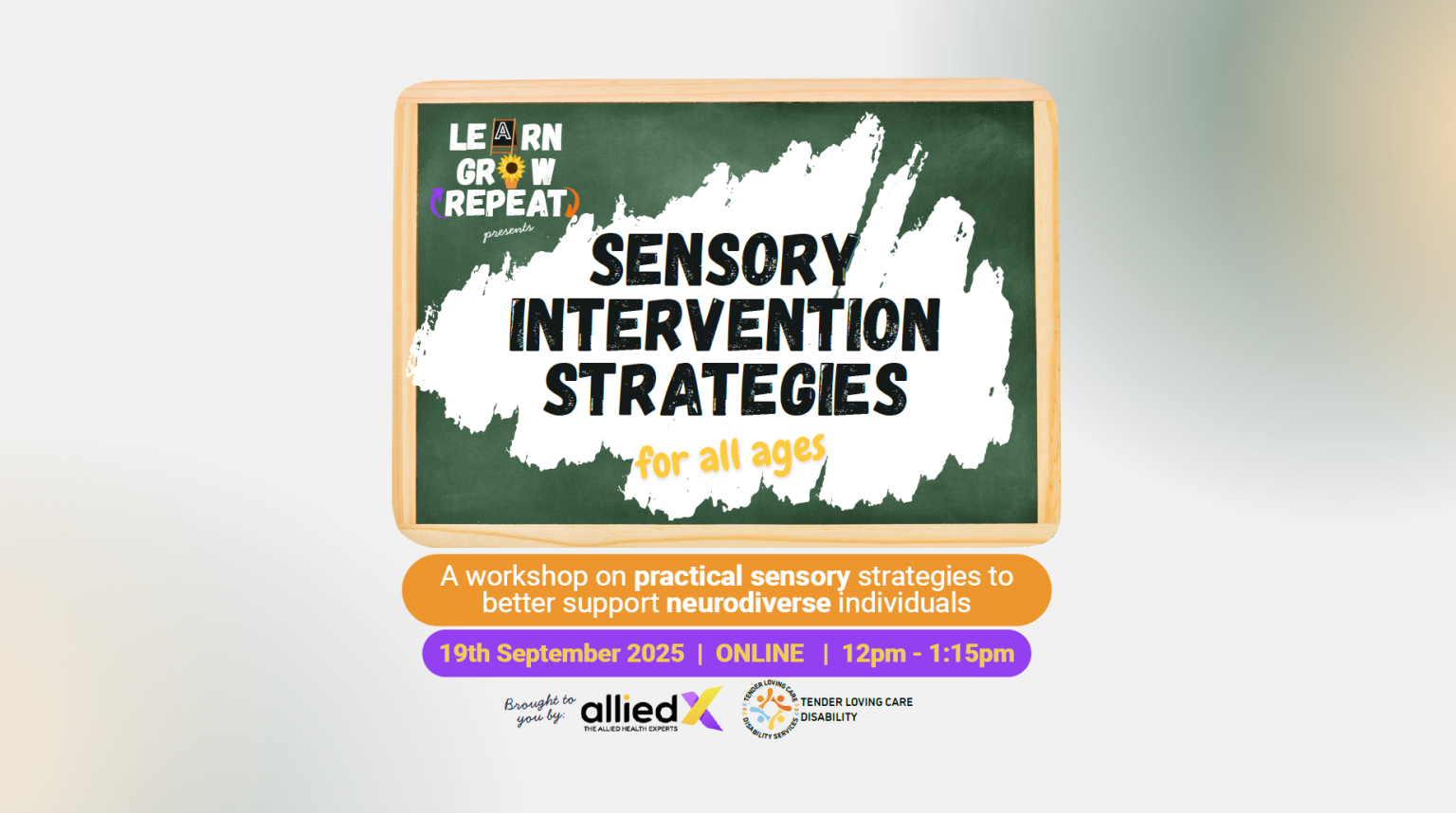
Learn. Grow. Repeat. 2: How can Support Coordinators Use Sensory Intervention Strategies?
In the second instalment of our Learn. Grow. Repeat. Series, our very own CLASI-certified senior occupational therapist, Sarah Ng, ran an engaging lunch and learn on sensory intervention strategies.
In case you couldn’t make it, here’s a recap of what we explored, with practical tips for supporting participants with sensory processing differences.
What is sensory processing and why does it matter?
Sensory processing is how the brain interprets input from our body and environment to help us respond effectively. Beyond the five senses, it includes:
- Vestibular sense (balance and movement)
- Proprioception (body awareness)
- Interoception (internal body signals like hunger or emotions)
When sensory processing functions well, it supports regulation, learning, and participation. Differences can impact daily life, from self-care to school, work, and community engagement.
What are common signs of sensory processing differences?
Signs vary depending on whether someone is over-responsive (hyper-reactive) or under-responsive (hypo-reactive):
- Auditory: difficulty in noisy environments
- Touch: discomfort with textures
- Proprioception: misjudging grips or bumping into objects
- Vestibular: balance challenges or constant movement seeking
- Interoception: difficulty noticing hunger, thirst, or emotions
Recognising these signs allows caregivers, teachers, and clinicians to provide more personalised support.
What are sensory intervention strategies?
Occupational therapists use strategies to regulate arousal and support participation:
- Proprioceptive input: deep pressure or heavy work activities
- Calming input: weighted blankets, firm hugs, slow movements
- Alerting input: trampoline jumps, upbeat music, crunchy or sour foods
A sensory diet is an individualised, planned set of activities woven into daily routines rather than extra chores.
How can sensory strategies be used in daily life?
At home: morning heavy work, adapted self-care tools, calming evening routines
At school: movement breaks, quiet corners, adaptive seating, noise-cancelling headphones
In the community: sensory-friendly outings, portable sensory kits with fidgets, headphones, chew tools
Flexibility is key. Strategies must be tailored to individual needs and daily routines.
Why is professional assessment important?
Assessment by an occupational therapist trained in Ayres Sensory Integration ensures strategies are safe, effective, and individualised. Tools like the Evaluation in Ayres Sensory Integration (EASI) provide a thorough understanding of each participant’s sensory profile.
How can Allied X support participants with sensory needs?
Allied X offers evidence-based, person-centred services, including:
- Occupational therapy with immediate capacity at multiple locations
- Speech pathology for sensory needs
Behaviour support, physiotherapy, and youth programs
We provide practical tips for schools, workplaces, and home to help participants feel safe, empowered, and ready to engage in daily life.
Refer Now
What’s next for Learn. Grow. Repeat?
Our Learn. Grow. Repeat. sessions offer quick learning, practical strategies, and CPD opportunities for support coordinators and clinicians.
Follow us on LinkedIn, Instagram and Facebook or follow us on Humanitix to hear about our upcoming events!
