Allied X
Author

Occupational Therapy vs Speech Therapy: Which Is Right for You or Your Child?
- Occupational Therapy
- Speech Pathology
- NDIS
- Areas of Support
When someone is referred for allied health support, one of the most common questions is:
“Do we need Occupational Therapy or Speech Therapy?”
For parents, participants, and support coordinators, understanding the difference between OT and speech therapy can feel confusing at first. While both therapies support development, independence, and participation, they focus on different areas of everyday life.
Knowing which therapy may be most suitable can help you make more informed decisions about support for yourself or your child.
What Is Occupational Therapy?
Occupational Therapy (OT) focuses on helping people build the skills needed for everyday activities and independence.
Occupational therapists support children, teenagers, and adults with areas such as:
- Fine motor skills
- Emotional regulation
- Sensory processing
- Handwriting
- Daily routines
- Self-care tasks
- Coordination and motor planning
- Community participation
For children, OT often supports participation at school, home, and social environments. For adults, therapy may focus more on independence, routine management, and functional daily living skills.
OT is often described as functional therapy because it focuses on improving participation in daily life.
What Is Speech Therapy?
Speech Pathology, also known as speech therapy, focuses on communication, language, speech, and swallowing.
Speech therapists support individuals with:
- Speech clarity
- Understanding language
- Expressing thoughts and needs
- Social communication
- Fluency and stuttering
- Literacy skills
- Feeding and swallowing
- Alternative communication methods (AAC)
Speech therapy is not only for children with delayed speech. Many teenagers and adults also access support to improve communication confidence, social interaction, or swallowing safety.
Occupational Therapy vs Speech Therapy: What’s the Difference?
The main difference between OT and speech therapy is the type of skills being supported.
Occupational Therapy focuses on functional skills and independence, while Speech Therapy focuses on communication and language development.
Here’s a simple therapy services comparison:
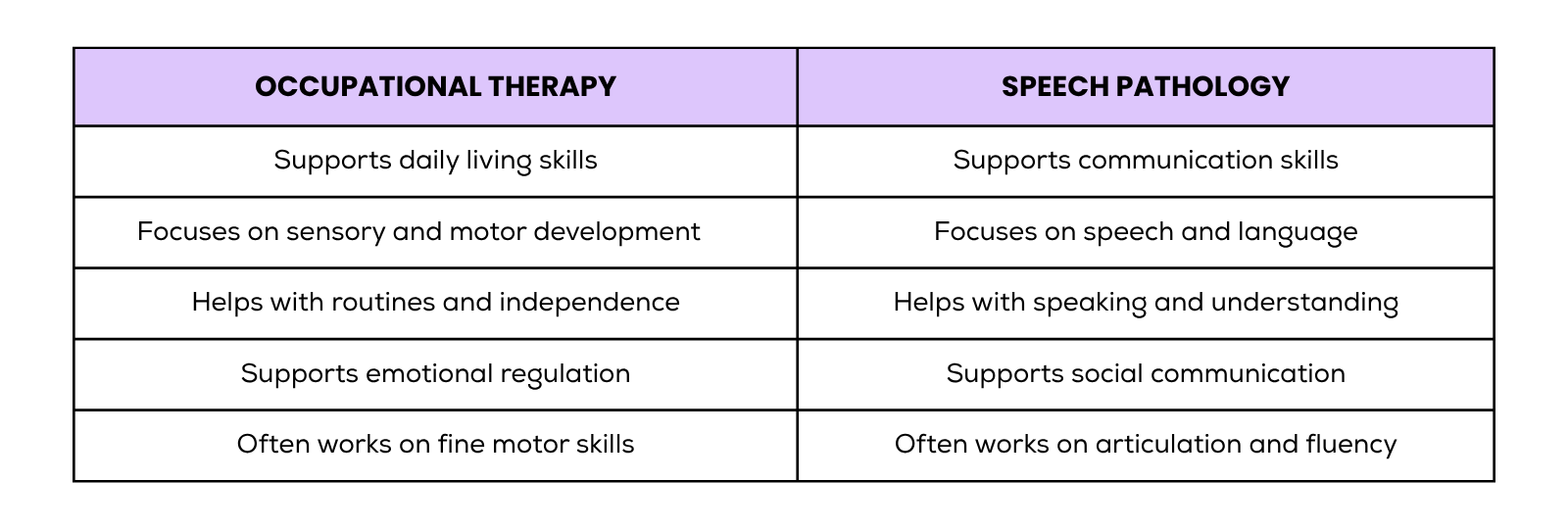
Although they are different allied health therapy types, they often work together to support shared goals.
When Might Someone Need Occupational Therapy?
Occupational Therapy may help if someone experiences:
- Sensory sensitivities
- Difficulty with handwriting
- Emotional regulation challenges
- Coordination difficulties
- Trouble with dressing or self-care
- Difficulty managing routines
- Challenges participating at school or home
For example, a child who struggles with classroom participation, transitions, or sensory regulation may benefit from OT support.
When Might Someone Need Speech Therapy?
Speech therapy may be appropriate if someone experiences:
- Delayed speech development
- Difficulty pronouncing words
- Trouble understanding language
- Challenges expressing themselves
- Social communication difficulties
- Stuttering
- Feeding or swallowing concerns
A speech therapist can help individuals communicate more effectively and participate more confidently in everyday interactions.
Can Someone Receive Both OT and Speech Therapy?

Yes, many individuals benefit from both services at the same time.
For example:
- A child with autism may receive OT for sensory regulation and speech therapy for communication skills.
- A participant working toward greater independence may need support with both communication and functional daily living skills.
- Teenagers may benefit from OT for organisation and emotional regulation while also working with a speech therapist on social communication.
This collaborative approach is common among multidisciplinary therapy providers and can help create more consistent support across different environments.
How Therapy Assessment Services Help
If you’re unsure which therapy is the right fit, starting with therapy assessment services can help identify the most appropriate support.
Assessments may involve:
- Observations
- Functional assessments
- Communication assessments
- Parent or caregiver discussions
- Goal-setting conversations
Sometimes only one therapy is recommended, while other individuals may benefit from multiple supports working together.
Choosing the Right Allied Health Support
When comparing communication vs functional therapy, the most important factor is the individual’s goals and daily challenges.
The right therapy depends on:
- Areas of difficulty
- Functional impact
- Communication needs
- Developmental goals
- Daily participation
At Allied X, our team works collaboratively across Occupational Therapy, Speech Pathology, Behaviour Support, Psychology, and Physiotherapy to provide coordinated and person-centred support.
Allied Health Services Across Sydney, Gold Coast, and Adelaide
Allied X supports children, teenagers, and adults across:
- Sydney
- Gold Coast
- Adelaide
Our therapists provide support in clinics, homes, schools, community settings, and through telehealth where appropriate.
Whether you’re exploring therapy for the first time or looking for a provider that offers collaborative care, our team can help guide you through the process.
Understanding occupational therapy vs speech therapy can make it easier to choose the right support for yourself or your child.
While Occupational Therapy focuses more on functional skills and independence, Speech Therapy supports communication, language, and social interaction.
In many cases, both therapies work together to support stronger long-term outcomes and everyday participation.
If you’re unsure where to begin, speaking with an experienced allied health team can help you identify the most appropriate pathway forward.
Contact us today.
