Allied X
Author
Fine Motor Skills vs Gross Motor Skills: What's the Difference?
- Occupational Therapy
- Physiotherapy
- Areas of Support
When your child struggles to hold a pencil, avoid playground equipment or finds getting dressed difficult, it can be hard to know what's behind the challenge.
You may have heard the terms fine motor skills and gross motor skills, but what do they actually mean? More importantly, how do they affect everyday life?
Understanding the difference can help parents, participants and support coordinators recognise when extra support may be helpful and which allied health professionals can make a difference.
In this guide, we'll explain fine motor skills vs gross motor skills, provide everyday examples, outline signs that may indicate a delay, and discuss how allied health can support skill development across all ages.
What Are Fine Motor Skills?
Fine motor skills involve the small muscles of the hands, fingers and wrists. These muscles work together with vision, coordination and planning to complete precise movements.
Fine motor development begins in infancy and continues throughout childhood as children learn increasingly complex skills.
Examples of fine motor skills include:
- Holding a pencil correctly
- Drawing and colouring
- Cutting with scissors
- Doing up buttons and zips
- Using cutlery
- Turning pages in a book
- Building with small blocks
- Opening containers
- Typing on a keyboard
- Picking up small objects
These everyday tasks may seem simple, but they require strength, coordination, dexterity and practice.
What Are Gross Motor Skills?
Gross motor skills involve the large muscles of the arms, legs and core that allow us to move our bodies.
Gross motor development supports mobility, balance, posture and physical confidence.
Examples include:
- Crawling
- Walking and running
- Jumping
- Climbing playground equipment
- Throwing and catching a ball
- Riding a bike
- Kicking a football
- Standing on one foot
- Swimming
- Getting up from the floor
These skills provide the foundation for participation at home, school, work and in the community.
Fine Motor Skills vs Gross Motor Skills: What's the Difference?
Although they often develop together, there are some key differences.
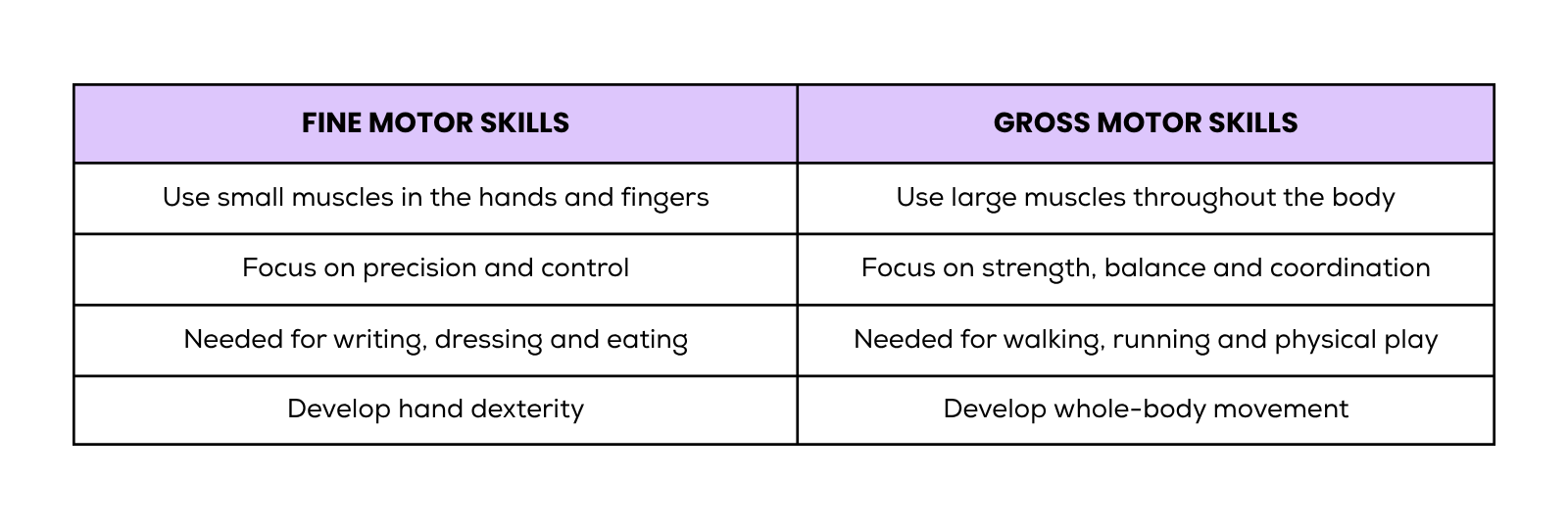
Think of it this way:
A child climbing onto playground equipment is using gross motor skills.
Once they reach the top and carefully clip their jacket zip, they're using fine motor skills.
Both are equally important for independence and participation.
Why Are Both Types of Motor Skills Important?
Motor skills affect far more than physical movement.
They influence confidence, learning, independence and social participation.
Strong motor skills help people:
- Participate in school activities
- Play with friends
- Complete self-care tasks
- Build confidence
- Join sports and recreation
- Develop handwriting skills
- Manage daily routines
- Participate more independently in the community
When either fine or gross motor skills are difficult, everyday tasks can become frustrating and exhausting.
Signs Your Child May Need Extra Support
Every child develops differently, and reaching milestones slightly earlier or later than peers isn't always a cause for concern.
However, ongoing difficulties may be worth discussing with an allied health professional.
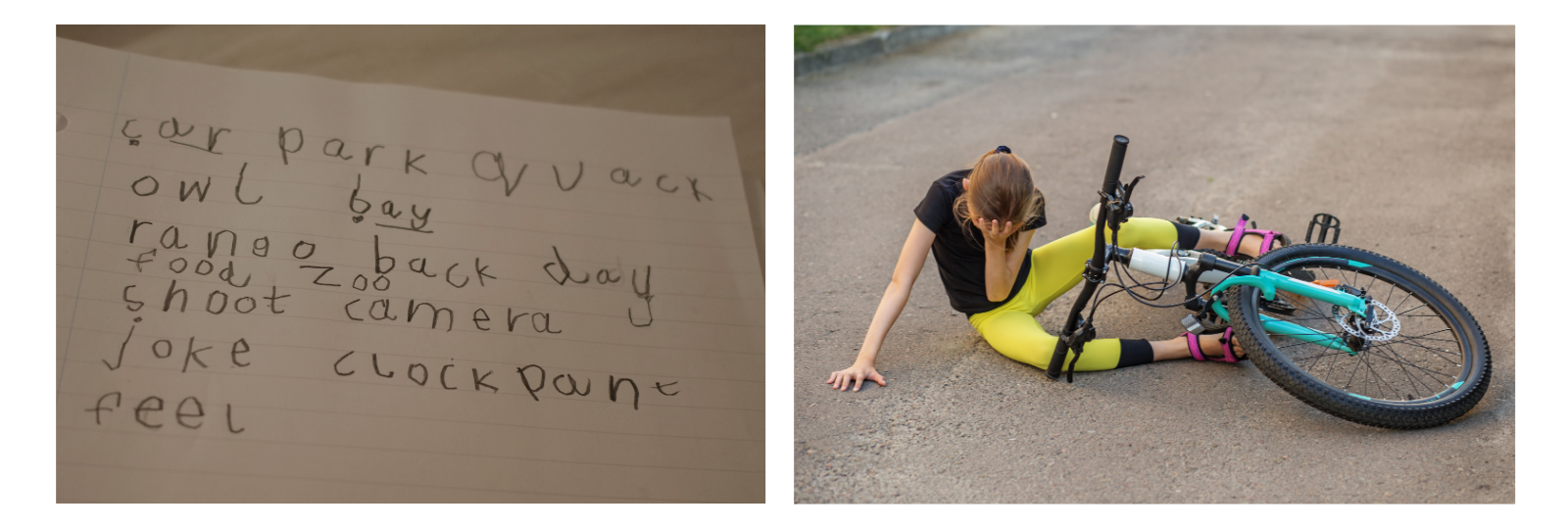
Fine motor development concerns may include:
- Difficulty holding crayons or pencils
- Avoiding colouring or drawing
- Trouble using scissors
- Struggling with buttons or zips
- Frequently dropping objects
- Messy handwriting that doesn't improve with practice
- Difficulty feeding themselves using cutlery
Gross motor development concerns may include:
- Frequent falls
- Difficulty climbing stairs
- Poor balance
- Avoiding playground equipment
- Difficulty jumping, hopping or skipping
- Appearing clumsy compared to peers
- Becoming tired quickly during physical activity
Early support can often make everyday activities easier and help build confidence over time.
Can Adults Experience Motor Skill Difficulties?
Absolutely. Motor challenges are not limited to children.
Adults may experience changes in motor skills due to:
- Neurological conditions
- Brain injury
- Stroke
- Developmental disabilities
- Chronic health conditions
- Ageing
- Physical injuries
Difficulties may affect work, driving, cooking, dressing or participating in hobbies.
The right support can help improve function, independence and quality of life.
How Allied Health Can Help
Motor skills often involve more than one area of development, which is why a collaborative approach can be beneficial.
At Allied X, our multidisciplinary team works together to provide personalised support based on each person's goals.
Occupational Therapy
Occupational Therapists help people develop the skills needed for everyday life.
Support may include:
- Improving hand strength
- Building pencil grasp and handwriting skills
- Developing dressing and self-care skills
- Sensory strategies that support participation
- Fine motor coordination activities
- Equipment recommendations when appropriate
Physiotherapy
Physiotherapists focus on movement, balance, strength and mobility.
They may assist with:
- Gross motor development
- Balance and coordination
- Walking and running skills
- Strength and endurance
- Posture
- Injury rehabilitation
Speech Pathology
While speech pathologists are best known for communication support, they can also help with:
- Feeding skills
- Mealtime participation
- Oral motor skills
- Safe swallowing when appropriate
Psychology
Motor challenges can sometimes affect confidence, emotional wellbeing and participation.
Psychologists may help individuals:
- Build resilience
- Develop coping strategies
- Manage anxiety related to school or participation
- Improve confidence in everyday situations
Behaviour Support
Behaviour Support Practitioners work alongside families and support teams to understand behaviours that may be influenced by communication, sensory needs, environmental factors or challenges with daily activities.
They help create practical strategies that support participation and independence across home, school and community settings.
Supporting Motor Skill Development at Home
Parents and carers don't need expensive equipment to encourage skill development.
Simple everyday activities can make a big difference.
Activities for fine motor development
- Play with playdough
- Thread beads
- Complete puzzles
- Build with LEGO® or blocks
- Draw, colour and paint
- Use kitchen tongs during play
- Practise cutting with child-safe scissors
Activities for gross motor development
- Visit local playgrounds
- Play ball games
- Ride scooters or bikes
- Dance together
- Create obstacle courses
- Jump, hop and skip games
- Nature walks
The goal isn't perfection; it's giving children opportunities to practise through enjoyable everyday experiences.
When Should You Seek an Assessment?
If motor challenges are affecting daily life, school participation or independence, an assessment can provide valuable information.
An allied health assessment may identify strengths, areas requiring support and practical strategies tailored to individual goals.
Seeking support early doesn't mean something is "wrong." It simply provides the opportunity to build skills before challenges become bigger barriers.
Why Families Choose Allied X
At Allied X, we believe therapy should focus on meaningful participation in everyday life.
Our experienced team provides evidence-informed support across:
- Occupational Therapy
- Physiotherapy
- Speech Pathology
- Psychology
- Behaviour Support
With clinics across Sydney, the Gold Coast and Adelaide, as well as mobile and telehealth services where available, we work closely with participants, families and support coordinators to deliver collaborative, goal-focused care.
Whether you're supporting a child learning to write, a teenager building confidence in sport, or an adult working towards greater independence, we're here to help.
Ready to Support Your Goals?
Understanding fine motor skills vs gross motor skills is the first step towards recognising how movement influences everyday life.
If you have concerns about fine motor development or gross motor development, early guidance can make a meaningful difference.
Contact Allied X today to learn how our Occupational Therapists, Physiotherapists, Speech Pathologists, Psychologists and Behaviour Support Practitioners can support you or someone you care about in Sydney, the Gold Coast or Adelaide.
